
Back to Insights
What Medicaid Reform Could Mean: Predictions for Congress and the States
.png)
Congress is moving forward with major Medicaid changes, and while the details are still unfolding, one thing is certain: reform will be significant.
The recently passed House budget resolution proposes reducing Medicaid spending by up to $880 billion over a decade—a cut representing nearly 29% of state-financed Medicaid spending per resident.
With more than 79 million Americans relying on Medicaid or CHIP, these cuts could set off a chain reaction across federal, state, and local governments. But where will the biggest political and policy battles take place?
I make no judgments on the merits for or against reform, but here is what I would look for in Congress and the states if reform moves forward.
Congress: The Medicaid Midterms
If reform moves forward, I predict Medicaid becomes a major narrative in the 2026 midterm elections.
We’ve seen this before. In 2018, during President Trump’s first term, healthcare was the number one issue in the midterms. Nearly half of all Democratic campaign ads focused on defending Obamacare and protecting coverage for people with preexisting conditions. That message resonated: Democrats flipped 41 House seats, regaining the majority in a wave election.
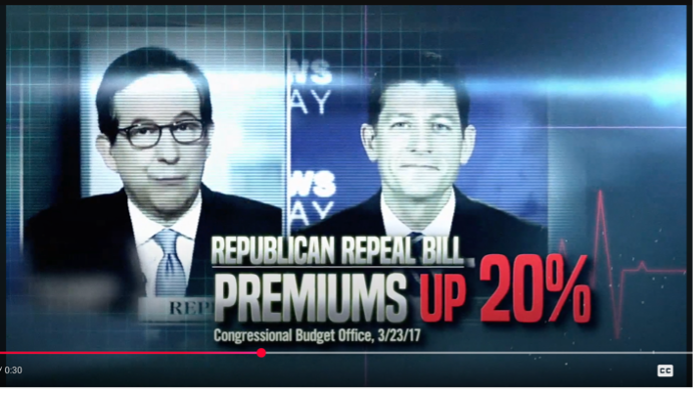
Now, with Medicaid on the chopping block, could history repeat itself?
Polling data consistently shows that Medicaid is viewed favorably by the public:
- 74% of Americans report having a favorable view of Medicaid.
- 80% believe Medicaid is important for their family and community.
- Even among Republicans, 65% oppose major Medicaid cuts.
- Nearly half of independent voters (47%) believe the U.S. does not spend enough on Medicaid. (KFF Poll)
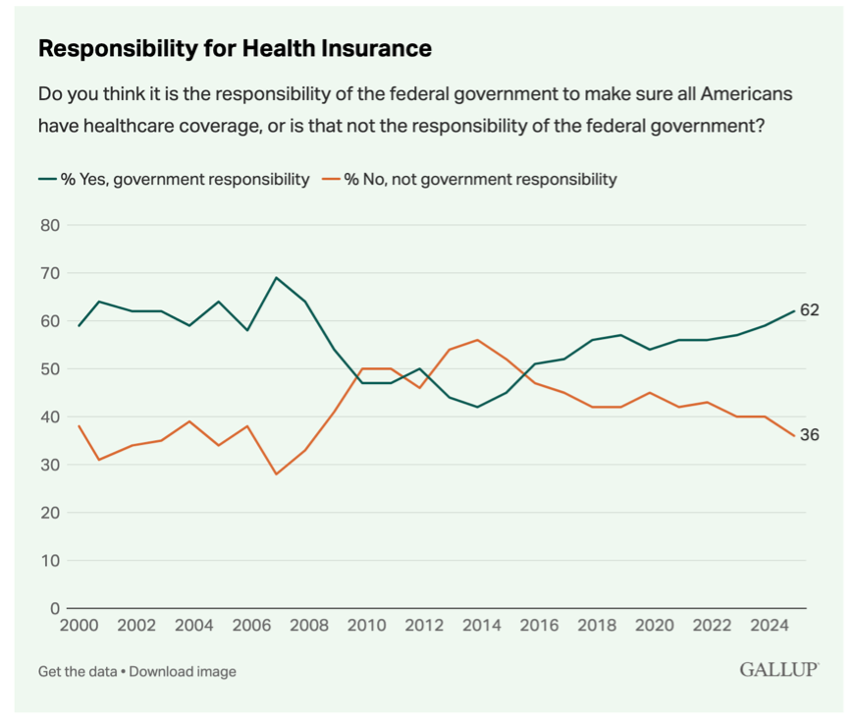
- Over the last twenty years, Americans shifted their opinion to now believing it is the government’s responsibility to ensure healthcare coverage for all.
- Cuts will disproportionately impact rural states, intensifying political pressure on key swing districts.
- Expect a heated debate over who deserves coverage and who should pay for it—similar to the fights over the Affordable Care Act (ACA).
For Democrats, this could represent a much needed shift in the conversation back to their core issues—protecting entitlements and social safety nets— to shake them out of their record low approval numbers.
Meanwhile, Congressional Republicans will need a proactive messaging strategy to blunt the impact of Medicaid reform, particularly in competitive House and Senate races. Such messaging could focus on rooting out waste, fraud and abuse and lowering government spending, both popular policies.
States: Medicaid Reforms Trigger A Ripple Effect
Federal cuts wouldn’t just shrink Medicaid itself—they would require states to reevaluate their own spending. Many states rely on federal Medicaid funding to balance their budgets, and any shortfall could mean tough choices elsewhere.
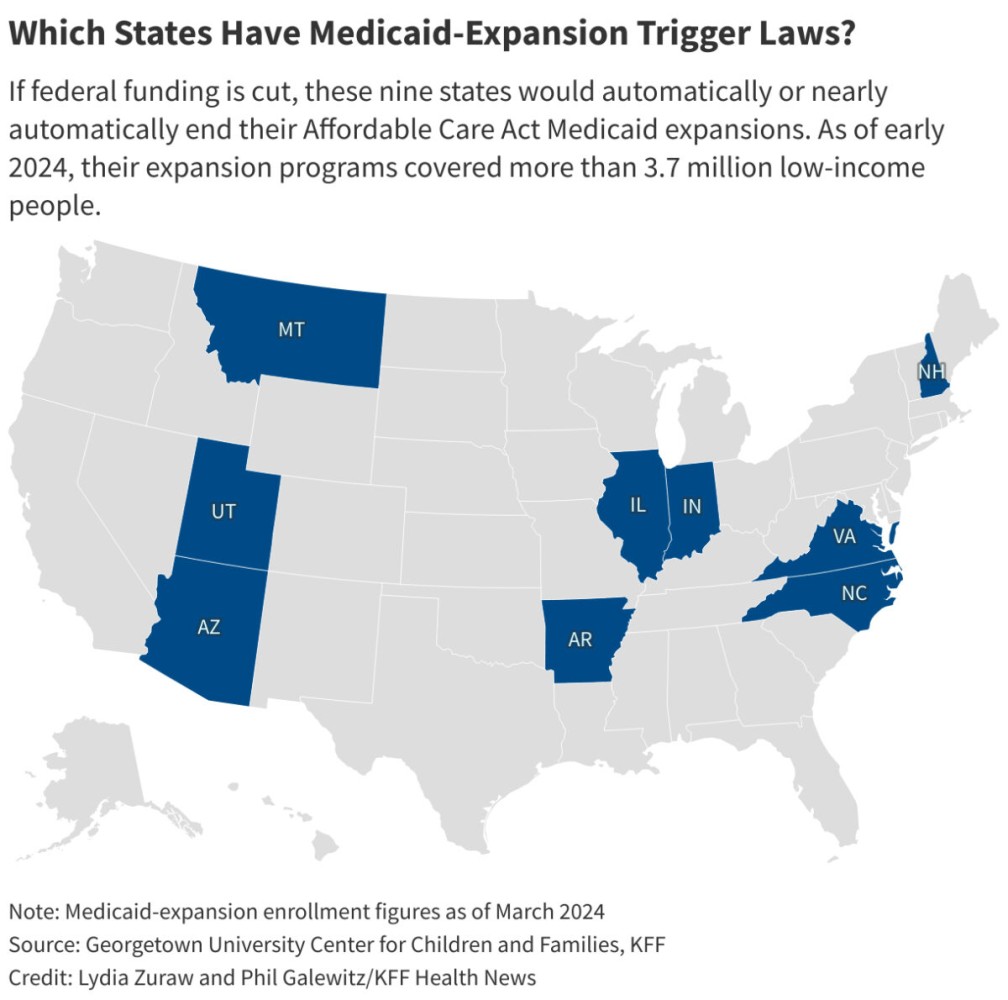
- Some states have automatic “trigger laws” that will reduce Medicaid eligibility if federal funding drops below a certain level. For instance in 9 states any reduction below the 90% matching rate triggers automatic cessation of Medicaid expansion (aka people could lose coverage).
- If states try to offset the cuts with new taxes, that could represent a 6% increase in state taxes per resident nationwide.
- States could also choose to cut funding from other programs, like K-12 education, to make up for lost Medicaid dollars. For context, the proposed federal Medicaid cuts would represent 19% of state spending per pupil on education.
Many legislatures could be forced into special sessions to deal with the fallout, and governors will be under intense pressure to find solutions that avoid painful trade-offs.
For public affairs professionals, the key battle may not be in Washington—but in state capitals. Organizations need to prepare now for a tougher funding environment in future years.
- Efficiency, cost-savings, and patient-first messaging will be key advocacy points as lawmakers look for ways to soften the impact of cuts.
- Scrutiny on fraud, waste, and abuse will increase, meaning compliance and oversight will be more critical than ever.
- If states move to raise taxes to offset funding losses, businesses and advocacy groups must stay ahead of the debate to avoid being caught in the crosshairs.
Final Thoughts
Medicaid cuts will set off a complex chain reaction in Congressional politics, state budgets, and the healthcare industry. It has the potential to dominate politics and policy at the state and federal level for many years.
Now is the time to get ahead of these changes—because once the debate starts, the winners will be the ones who were thinking three steps ahead.
.png)

.png)

Ready to build your movement?
Let’s start the conversation.